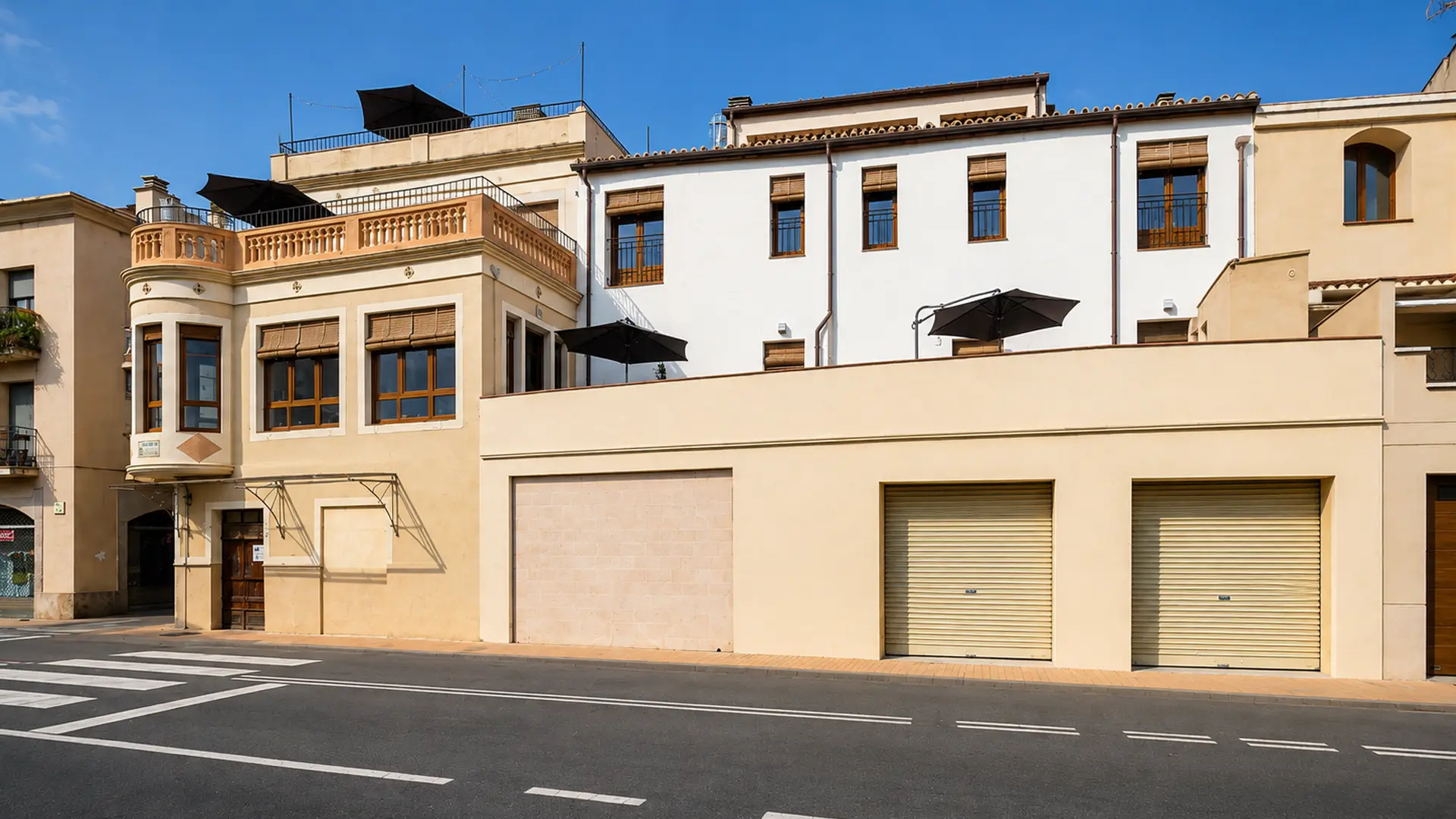
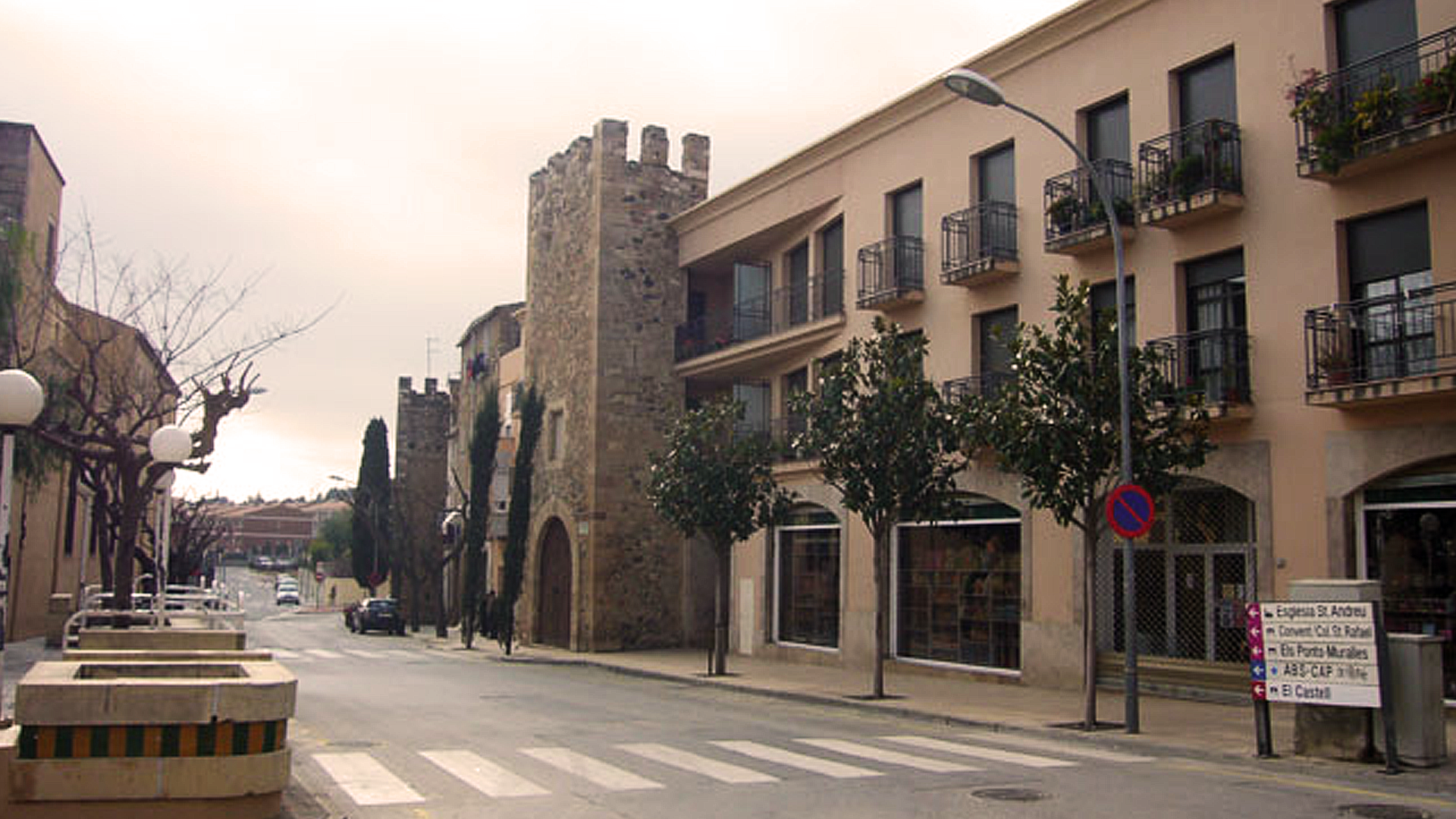
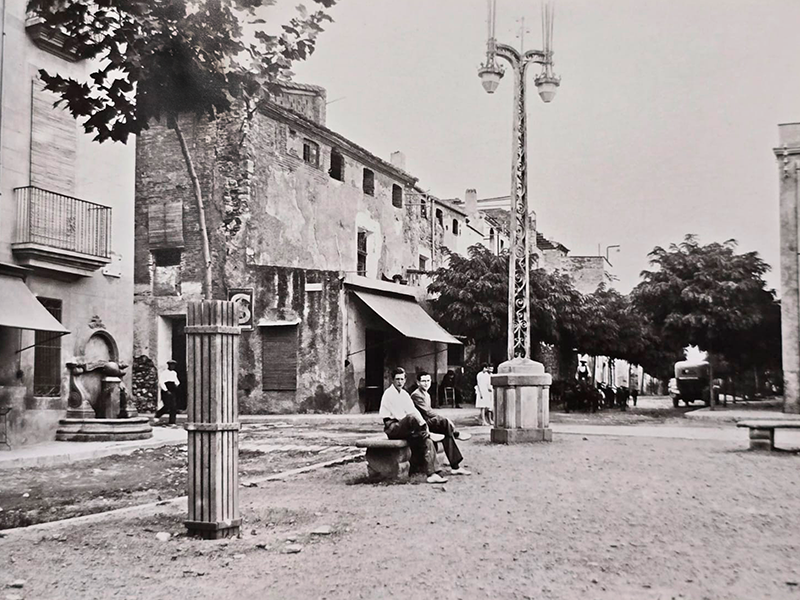
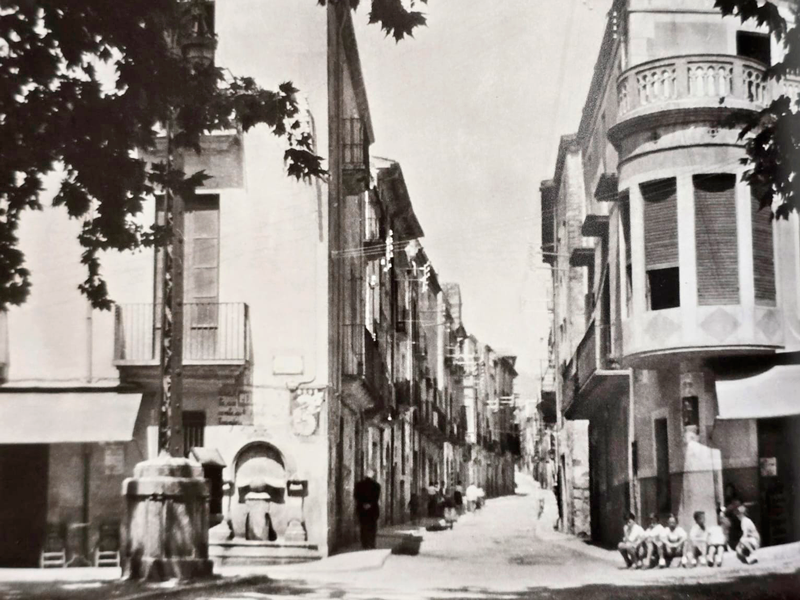
The Casa del Portal d’Avall has been documented since the 14th century. The oldest name known of the house is ca Rabassa, a name that has survived since ancient times until the late 19th century. The house is located on Major Street, at the corner with Ollers Street, where the tilemakers lived and worked until well into the 19th century. In medieval times, the house was built using the wall of the southern part of the wall that surrounded the town and next to the Portal d’Avall, one of the main gates of access to the walled enclosure of the historic center of the Selva. The origins of the first fortified perimeter of the town date back to the 12th and 13th centuries.
The Portal d’Avall, also known as Portal Jussà, is mentioned in a document from 1340, where a tower located above the Portal is mentioned. Later, starting in 1373, the construction of houses around this Portal is documented, which shows the urban development of this area and probably it was at this time that the house was built. Like the other Portals, the Portal d’Avall closed its doors to protect the town from the warlike threats of each era. Finally, between 1854 and 1856, it is recorded that the Portal was demolished.
In the early 20th century and well into the seventies, the lower floors of the house housed a bar, popularly known as the Rat Bar. Located in such a central point of the town, this space was for decades a meeting place that was very present in the memories of several generations of Selvatans. In the 1950s, the house was completely renovated with the construction of the terrace, an element that today gives the house its unique character. As the 21st century began, the house began a new phase as a building that houses tourist apartments.
Thus, Casa del Portal d’Avall constitutes a testimony to the urban evolution of the Selva; its privileged location has made it a direct witness to the transformation of the Selva and the lives of its inhabitants. Over the centuries, the house has undergone various renovations and transformations, adapting to the needs of each era until reaching its current state. Despite these changes, it still retains its connection with the past and the urban space that surrounds it.
Staying here is therefore much more than finding a place to sleep: it is entering a house that has seen time pass by, located in one of the spaces with the most memory in the village, and continuing, even for a few days, a story that began more than seven centuries ago.
 Book your apartment